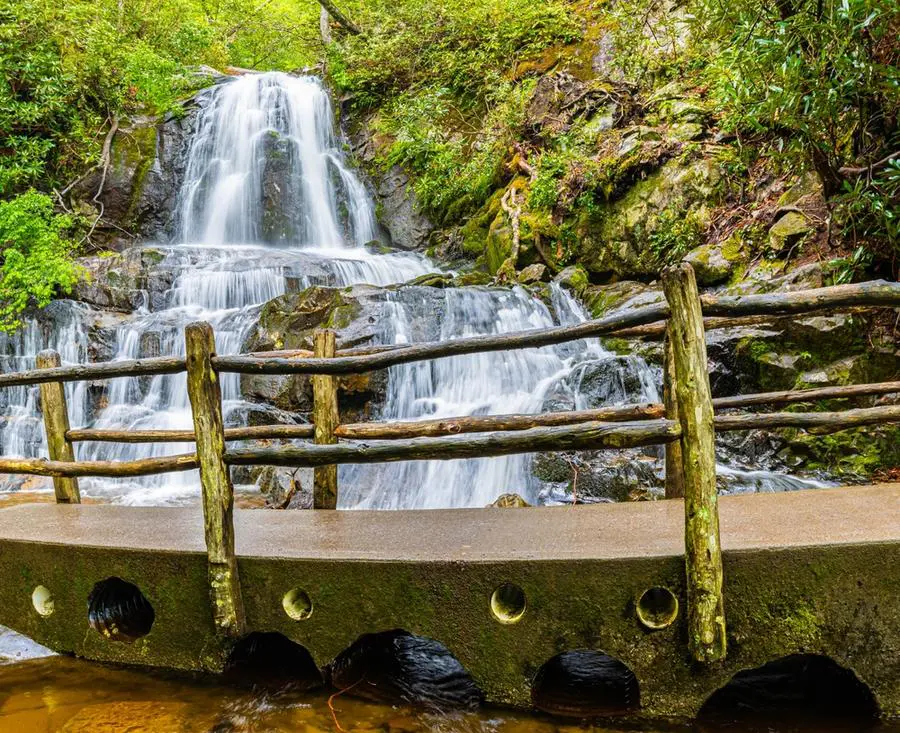
As the unofficial gateway to Great Smoky Mountains National Park, Gatlinburg is one of the most popular outdoor destinations in Tennessee. The hiking trails around Gatlinburg wind through some of the oldest, most biodiverse forests in the United States.
Before you lace up your boots, browse our Gatlinburg treehouse rentals and book a stay just minutes from the national park entrance. Every treehouse comes with a full kitchen for packing a trailside picnic, and a porch worth coming back to after a long day outside.
Whether you’re chasing a waterfall or a mountaintop view, hitting the trail is one of the best free things to do during your stay.
Now, here are the 8 best hiking trails in and around Gatlinburg.
1. Grotto Falls Trail
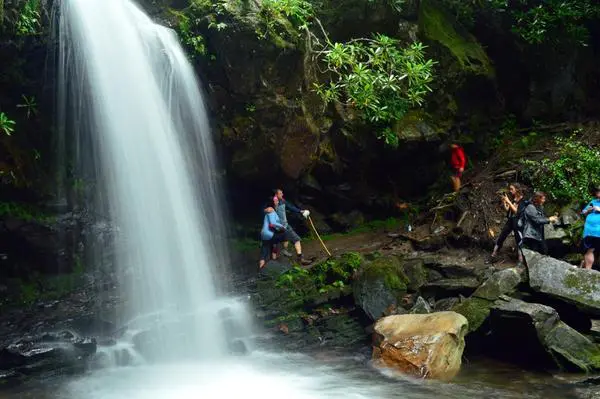
Photo Credit: James Kirkikis
- Route: www.alltrails.com/trail/us/tennessee/grotto-falls-trail
- Distance: 2.7 miles round trip, 1–1.5 hours
- Difficulty: Moderate
- Why Go: 25-foot-tall waterfall you can explore
Grotto Falls is the only waterfall in the Great Smoky Mountains National Park that you can walk behind, and the trail through old-growth hemlock forest makes the approach just as memorable as the falls themselves.
The path follows Trillium Gap Trail, the same route pack llamas use to resupply LeConte Lodge near the summit of Mount LeConte, so keep an eye out for them on weekday mornings. The trail is also known for its wildflowers and rhododendron thickets in late spring and early summer.
The trailhead sits along the one-way Roaring Fork Motor Nature Trail, a scenic loop road that’s worth the slow drive on its own even before you park.
The earlier in the day you go, the more you’ll be able to enjoy this grotto before the midday crowds arrive. Bring a light jacket, since the spray behind the falls stays cool even in summer.
2. Rainbow Falls Trail
- Route: www.alltrails.com/trail/us/tennessee/rainbow-falls-trail
- Distance: 5.4 miles round trip, 3–4 hours
- Difficulty: Moderate
- Why go: Tallest single-drop waterfall in the Smoky Mountains
Rainbow Falls drops 80 feet, making it the tallest single-drop waterfall in the Smokies. The iridescent mist and sunlight cast a technicolored rainbow over the spray on especially sunny hiking days, giving the trail its name.
The climb gains over 1,500 feet of elevation over rocky, root-covered terrain, so budget plenty of time and start early if you’re hiking in summer heat. The trail itself, which includes meandering across two picturesque log footbridges, is so beautiful you’ll forget about the gain.
The falls run fullest in spring after snowmelt and rain, so if you’re weighing the best time to visit the Smoky Mountains with a hike like this one in mind, that’s the season to aim for.
This is one of the most stunning waterfalls in the Smoky Mountains, so it’s worth a spot on any serious hiker’s list.
3. Chimney Tops Trail
- Route: www.alltrails.com/trail/us/tennessee/chimney-tops-trail
- Distance: 4.1 miles round trip
- Difficulty: Strenuous
- Why Go: A low-mileage way to access panoramic views of the park.
Chimney Tops packs some of the biggest payoff per mile in the park, climbing steadily to a rocky overlook with sweeping views across the Sugarlands valley. The trail was rebuilt after the 2016 wildfire and now stops at a safer man-made overlook just below the actual twin pinnacles, which are no longer maintained for scrambling.
The route gains roughly 1,450 feet over its short distance after crossing Ring Prong Creek, so you’re going to want to rest up at the treehouse before embarking on this one. Steady footing matters on the final push.
Go on a clear afternoon for incredible views when the light hits the surrounding ridgelines just as the sun starts to dip.
4. Alum Cave Trail
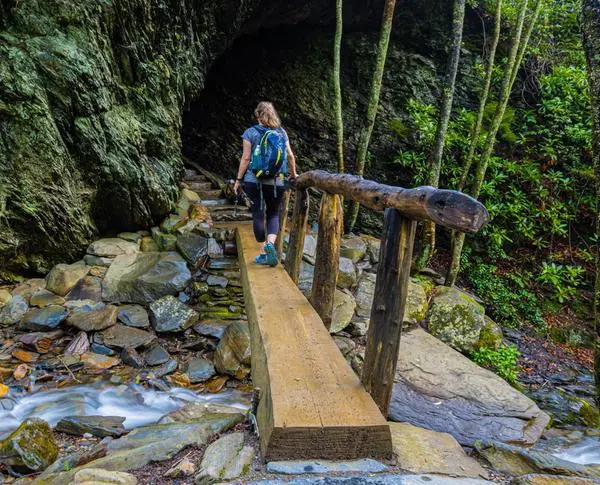
Photo Credit: Billy McDonald
- Route: www.alltrails.com/poi/us/tennessee/gatlinburg/alum-cave
- Distance: 4.7 miles round trip, 2–3 hours
- Difficulty: Moderate
- Why Go: Unique geological formations
The trail to Alum Cave Bluffs passes through Arch Rock, a tunnel-like passage carved through stone, and a narrow ridgeline called Peregrine Peak before ending at a massive overhanging cliff that once supplied minerals mined during the Civil War.
The overhang provides welcome shade on hot afternoons, a nice break before the walk back down.
There’s lots of Smoky Mountain wildlife to spot on this trail, and black bears are particularly active in this part of the park, so carry food in a sealed bag and stay vigilant. Keep a respectful distance from any wildlife you see, but especially bears.
If you’re looking for a much longer, more challenging day, you can continue to the summit of Mount LeConte, which extends the trail to around 11 miles in total.
5. Laurel Falls Trail
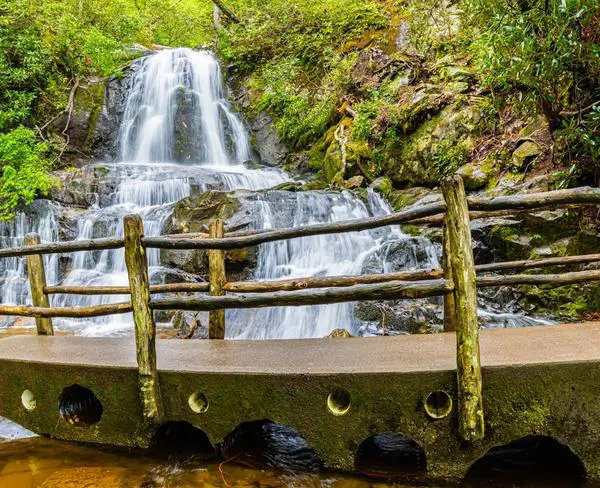
Photo Credit: Billy McDonald
- Route: www.alltrails.com/trail/us/tennessee/laurel-falls–2
- Distance: 2.5 miles round trip, 1–1.5 hours
- Difficulty: Easy to moderate
- Why Go: Family-friendly hike for younger visitors or inexperienced hikers
Visiting Laurel Falls is one of the most popular family-friendly activities in the park. Follow a paved path without much elevation gain to an 80-foot cascading waterfall that splits the trail in two.
The pavement makes the route manageable for stroller-pushing parents and younger kids, though the surface is cracked and sloped in places, so be prepared for a little challenge.
The trail is lined heavily with mountain laurel and evergreen rhododendron bushes, which burst into beautiful pink and white blooms during late spring. A picnic packed from your treehouse’s kitchen makes a great reward at the falls, especially if you snag a spot on the rocks along the creek below the cascade.
In early 2026, the entire trail underwent renovations, so double-check whether it’s accessible on the National Park Service website before you go.
6. Gatlinburg Trail
- Route: www.alltrails.com/trail/us/tennessee/gatlinburg-trail
- Distance: 3.9 miles round trip, 1–1.5 hours
- Difficulty: Easy
- Why Go: Allows dogs and is suitable for bicycles
The Gatlinburg Trail is the only trail in the entire national park open to dogs, making it an easy pick for guests traveling with a pet (just like our pet-friendly treehouse stays). Bicycles are also permitted.
It runs along the West Prong of the Little Pigeon River between downtown Gatlinburg and the Sugarlands Visitor Center, passing the crumbling remains of a few old homesites along the way.
The wide and mostly flat gravel path stays shaded along the river for much of its length, which makes it a comfortable option even on a warmer afternoon. It’s an easy trail to walk in either direction, so guests staying in town can start from the Gatlinburg end and simply turn around whenever they’re ready.
7. Cataract Falls Trail
- Route: www.alltrails.com/en-gb/trail/us/tennessee/cataract-falls–2
- Distance: 1.2 miles round trip, 1 hour
- Difficulty: Easy
- Why Go: A quick outing with young kids or first-time hikers
Cataract Falls is the shortest hike on this list. It’s an easy, mostly flat walk from Sugarlands Visitor Center to a modest but pretty waterfall tucked into the forest.
It’s a good option after a long car ride to the Smokies, when everyone needs to stretch their legs without committing to a full day of hiking. It might not be the Appalachian Trail, but it’s a great way to whet your appetite for longer, more challenging hikes.
The wide, well-maintained path also makes it one of the more stroller-friendly routes near Gatlinburg, and it connects directly to the Gatlinburg Trail if your group wants to turn a quick stop into a longer walk.
Since the route is so short, it’s easy to pair with a stop at the visitor center when you first arrive to pick up a trail map for the rest of your trip.
8. Baskins Creek Falls Trail
- Location: www.alltrails.com/trail/us/tennessee/baskin-creek-falls
- Distance: 2.9 miles round trip, 1.5–2.5 hours
- Difficulty: Moderate
- Why Go: An off-the-beaten-path waterfall trail for those escaping crowds
Baskins Creek Falls sees a fraction of the foot traffic that Grotto and Rainbow Falls do, despite the pretty payoff of a 35-foot cascade tumbling over a rock ledge.
The trail drops steadily through second-growth forest and crosses the creek a few times before the final push to the falls, so trekking poles help on the way back up, since that descent means a real climb on the return.
Along the way, you’ll pass the stone chimney and scattered foundation stones of an old homestead, a quiet reminder that this hollow was settled long before it became parkland. There’s also the opportunity to take a quick detour to an old cemetery that dates back to the 1800s.
This trail is a solid pick if you’ve already done the more famous waterfall hikes on this list and want something a little less crowded.
Ready to Hit the Gatlinburg Trails?
The hikes we’ve highlighted on this list offer something for every pace and skill level, all within a short drive of Gatlinburg, but they are just the beginning.
The Great Smoky Mountains National Park is a sprawling ecosystem with trails from Gatlinburg over the Newfound Gap to Cades Cove on the other end of the park. There’s so much more to discover once you arrive.
After a day on the trail, there’s nothing quite like soaking tired legs in a hot tub back at your rental before the next adventure. Book a stay at Treehouse Grove and start planning which trail you’ll tackle first.