Great Smoky Mountains National Park ranks as America’s most visited national park, drawing millions of visitors each year to its forested ridges and misty valleys that straddle Tennessee and North Carolina. This extraordinary diversity of terrain creates ideal conditions for incredible wildlife encounters that few places in North America can match.
With famous mammals like black bears and elk, hundreds of bird species, and enough salamanders to earn the park its reputation as the salamander capital of the world, wildlife watching opportunities here are virtually unlimited.
Many animals can be spotted right around Gatlinburg and along nearby scenic drives like Roaring Fork Motor Nature Trail and Newfound Gap Road.
If you’re ready to experience Great Smoky Mountains wildlife firsthand, book your stay at Treehouse Grove—perfectly positioned just outside Gatlinburg for wildlife spotting. Read on to discover which critters to look out for on your visit.
Iconic Smoky Mountain Mammals
Photo Credit: Danita Delimont
Bears, deer, and elk are the headliners for most visitors, drawing wildlife enthusiasts from across the country. While these large mammals capture the most attention, smaller mammals like squirrels and chipmunks often provide the most frequent sightings around wooded areas and hiking trails.
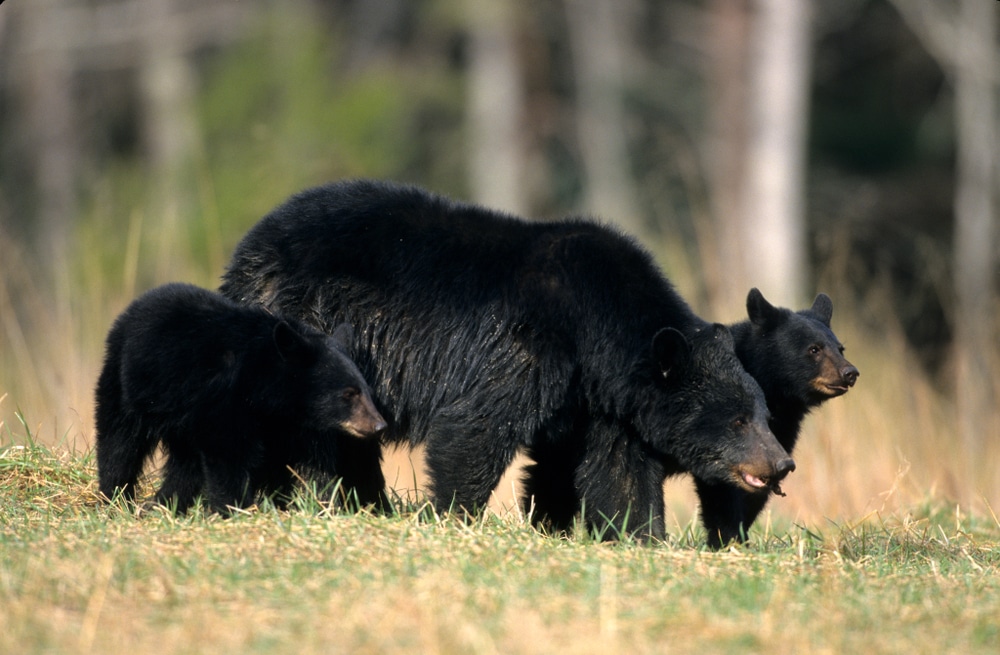
American Black Bears
Great Smoky Mountains National Park supports approximately 1,500 to 1,900 black bears, creating the densest population in the eastern United States with roughly two bears per square mile.
This makes the park one of the largest protected bear habitats east of the Mississippi and a premier destination for seeing bears in their natural habitat.
These intelligent omnivores spend their days foraging for food, climbing trees for acorns in fall, or flipping rocks and tearing into rotting logs searching for insects and small mammals on the forest floor.
For guests near Gatlinburg, the most reliable bear-viewing locations include Cades Cove and the Roaring Fork Motor Nature Trail, which begins just outside downtown.
The national park service requires maintaining at least 50 yards distance from bears; never approach closer, even if they appear calm.
Elk
Elk were successfully reintroduced to the Smokies beginning in 2001, when the first animals were released into Cataloochee Valley. After decades of local extinction due to hunting, these majestic animals now thrive in the park’s open valleys, representing one of the most successful wildlife restoration efforts in the region.
Mature bulls can exceed 700 pounds and stand around five feet at the shoulder, making elk the largest mammals in the Great Smoky Mountains. Their impressive size means they’re potentially dangerous if approached. The park requires visitors to maintain at least 150 feet of distance at all times.
The core herds remain centered in Cataloochee Valley and around the Oconaluftee Visitor Center, which is around an hour away from Gatlinburg. You might also spot elk grazing in open valleys as you explore hiking trails in the area.
The September–early October rut provides the most dramatic viewing, when bulls bugle loudly and spar with their antlers to attract females. These vocalizations carry across valleys and create unforgettable wildlife experiences for those positioned at safe distances.
White-Tailed Deer
White-tailed deer are among the most commonly seen mammals in the Smokies, favoring forest edges, meadows, and old fields throughout the park. These graceful animals are often visible without requiring long drives into the backcountry.
Deer thrive in the transitional zones between forest and open ground, making them particularly visible in Cades Cove, around the Oconaluftee fields, and along quieter roads near Gatlinburg.
Dawn and dusk provide the best viewing opportunities, as deer are crepuscular animals.
Birds of the Great Smoky Mountains
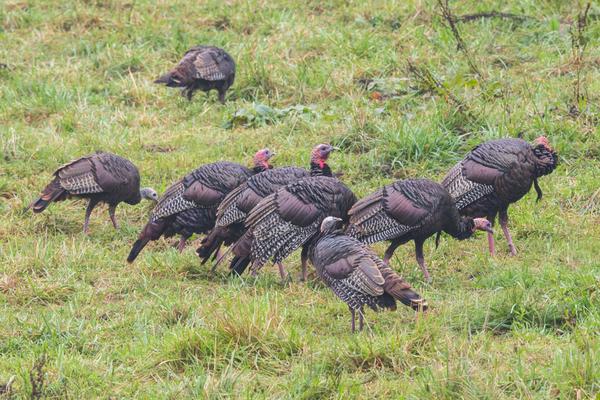
Photo Credit: BlueBarronPhoto
More than 200 bird species have been recorded in the Smokies, with approximately 120 species nesting within the park and many species migrating through seasonally. This makes the region one of the premier birdwatching destinations in the eastern United States with an incredible variety of avian encounters.
Songbirds and Forest Birds
Spring and early summer bring a surge of Neotropical migrants to the mountains, filling the forests with color and song. These birds breed in the Smokies’ diverse habitats before returning to tropical wintering grounds.
Some Neotropical species to look out for include:
- Scarlet tanagers
- Indigo buntings
- Black-throated blue warblers
- Ovenbirds
Birds of Prey and Owls
Red-tailed hawks, broad-winged hawks, and turkey vultures frequently soar over ridgelines and road corridors such as Newfound Gap Road, riding rising air currents in the afternoon. Scan the sky above valleys and open fields with binoculars often reveals these magnificent raptors.
Wild Turkeys and Other Large Birds
Wild turkeys represent a major conservation success story. Once rare in the early 1900s, these impressive birds are now commonly seen strutting through fields in Cades Cove, open areas near Oconaluftee, and occasionally along backroads leading to Gatlinburg cabins.
Other animals worth watching for include ravens circling high ridges, pileated woodpeckers with their loud hammering calls, and great blue herons stalking along mountain streams. Each adds to the extraordinary diversity of the park’s bird life.
Salamanders, Butterflies, and Other Little Critters
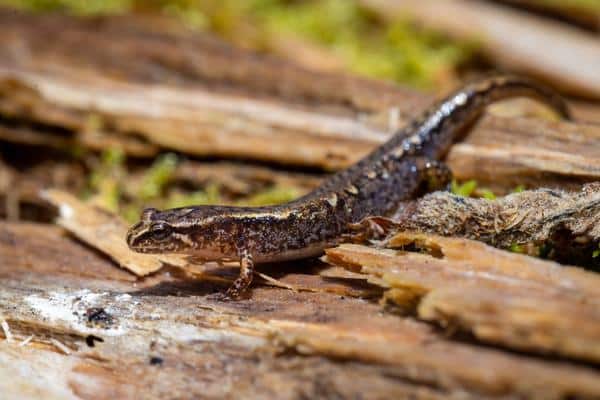
Photo Credit: Ben McMurtray
While bears and elk get most of the attention, smaller creatures truly make the Smokies one of the most biodiverse places in the world.
Treehouse Grove guests walking along creeks and seeps near Gatlinburg are in prime habitat to encounter these fascinating creatures. Looking down at logs, moss, and flowers, not just out at distant ridgelines, reveals an entire world of wildlife often overlooked.
Salamanders
The Great Smoky Mountains National Park is often called the salamander capital of the world, hosting more species of these amphibians than anywhere else on Earth.
More than 30 salamander species thrive here, with most belonging to a lungless group that breathes through moist skin and mouth linings. This physiological adaptation makes them entirely dependent on shady, damp habitats—exactly the environment found throughout the Smokies.
Visitors might encounter small, colorful species, like the red-backed salamander and the red black-chinned salamander, under logs and rocks near cool streams. Look carefully, but always replace rocks to preserve habitat. Avoid handling the animals.
Butterflies, Fireflies, and Pollinators
From late spring through early fall, meadows and roadside wildflowers host numerous butterflies, including Eastern tiger swallowtails, monarchs during migration, and smaller hairstreaks and skippers. Sunny openings around our cabins provide excellent viewing opportunities.
The Smokies are famous for synchronous fireflies, particularly near Elkmont (around 30 minutes from Gatlinburg), where thousands flash in unison during late May to early June.
Access is now managed by lottery through the National Park Service due to the phenomenon’s popularity. Even without lottery access, common fireflies around Gatlinburg create memorable summer evenings. Just keep outdoor lights minimal to protect them from human activity.
Native bees, hummingbirds, and other pollinators are also easy to enjoy from decks and on short nature walks. These insects are essential to the park’s healthy ecosystem.
Small Mammals
You’re almost guaranteed to see gray squirrels from your treehouse cabin if you stay with us. Red squirrels tend to prefer high elevations, so look out for them at Newfound Gap and other areas with spruce-fir forests.
Creeks and small rivers offer opportunities to spot river otters. These creatures were reintroduced to Little River in the 1980s. Look out for signs like tracks and scat.
Best Times of Day and Seasons for Sightings
Dawn and dusk—the first and last hour of daylight—are generally the best times to spot deer, bears, elk, and other large animals. Plan early morning wildlife tours before breakfast, and with a little luck, you might see something unexpected.
There’s no bad time to visit the Rockies if you’re looking for wildlife encounters, but different seasons bring different species.
Spring (March–May) brings bird migration, amphibian activity, and bear emergence from winter dens.
Summer (June–August)offers high-elevation birding, butterflies, and fireflies, though midday heat reduces visible mammal activity.
Fall (September–November) features elk rutting with dramatic bugling, bears feeding heavily on nuts, and vivid foliage as a scenic bonus.
Winter (December–February) provides quieter trails and improved chances to spot tracks in snow or mud. Even if overall activity is reduced, dedicated wildlife watchers often have trails to themselves and enjoy clearer sight lines through leafless forests.
Safety Precautions for Wildlife Spotting
Here are some top safety tips for wildlife spotting in the Smoky Mountains:
- Always maintain a safe distance; use binoculars or a zoom lens to observe animals without getting too close.
- Never feed wildlife or leave food scraps accessible; this prevents animals from becoming habituated to humans.
- Stay calm and avoid sudden movements or loud noises if you encounter wildlife unexpectedly.
- Keep pets leashed and under control to avoid disturbing wildlife.
- Follow all park regulations and posted signs regarding wildlife safety.
- Carry bear spray if hiking in backcountry areas, especially on longer or less-traveled trails.
- Avoid hiking alone during dawn or dusk when animals are most active.
- Store food securely in bear-proof containers or lockers when camping.
Enjoy Wildlife Spotting in the Smokies
The Great Smoky Mountains offer incredible biodiversity and wild animal experiences unlike anywhere else in North America. Every visit brings opportunities for discovery for nature lovers, no matter if they’re on the trails, playing golf, taking a scenic drive, rafting down whitewater rivers, or hanging out in your forest cabin.
Book your stay at Treehouse Grove to position yourself perfectly for wildlife encounters. You’ll have easy access to the best viewing locations and a peaceful forest setting that brings animals right to your doorstep.